
PULS
The pumped storage project is designed to strengthen security of supply as an integral part of the European interconnected grid.
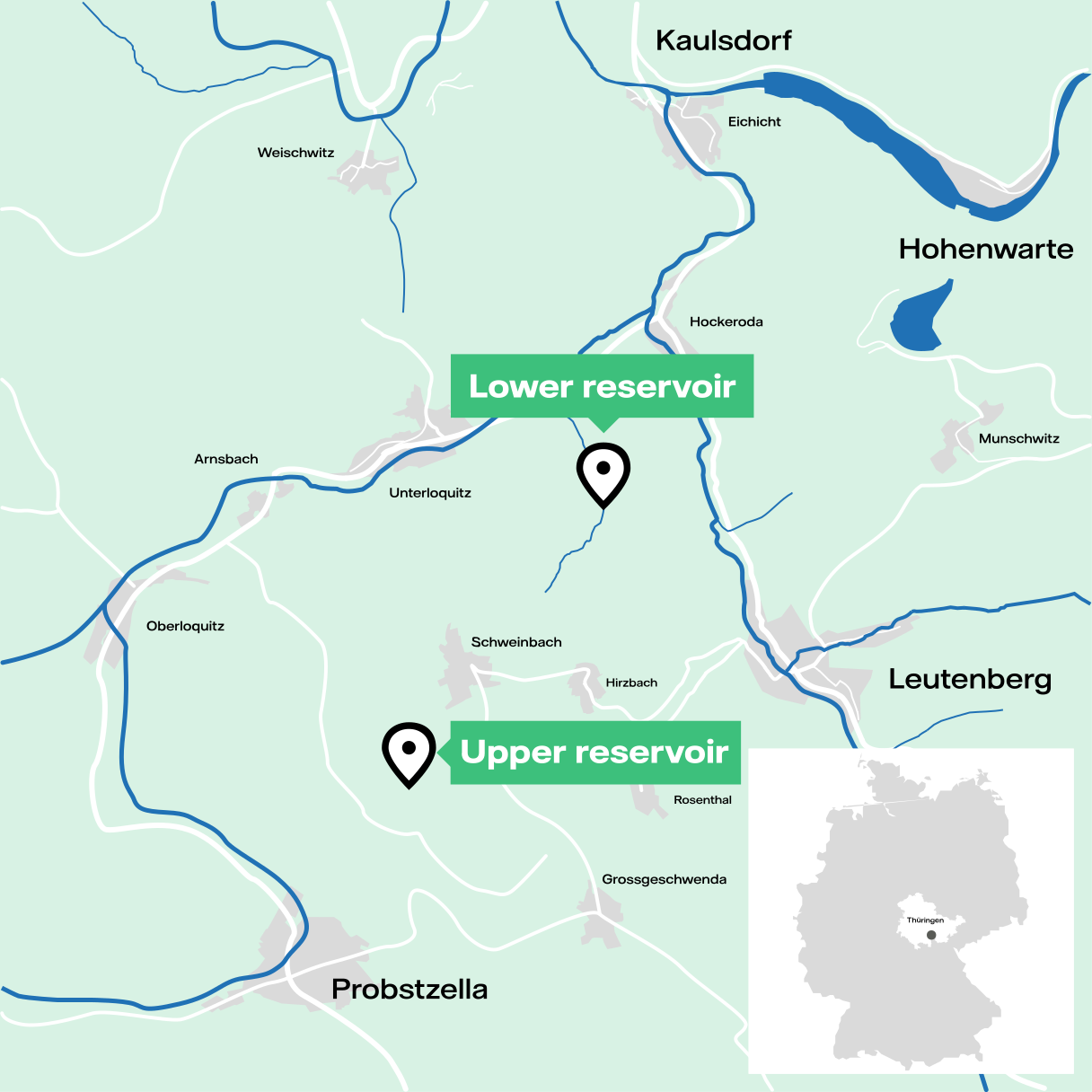
Vattenfall is planning the construction of the PULS pumped storage facility in southern Thuringia. The project complements Vattenfall’s existing high-performance pumped storage sites. The PULS facility will be developed from scratch to support grid stability and help integrate renewable energy sources by providing large scale electricity storage and flexibility.
Overall, PULS is expected to support the energy transition by ensuring grid stability and providing rapid flexibility in electricity generation. The project benefits from the specific conditions of the selected site in southern Thuringia, including an existing grid connection, suitable topography and geological conditions, and a favourable location for providing flexibility to support the integration of renewable electricity.
Key facts about PULS
PULS is an acronym formed from the initial letters of the surrounding towns:
- Probstzella
- Unterloquitz
- Leutenberg
- Schweinbach
A pumped storage plant is a type of hydropower facility that stores electricity as potential energy by moving water to an upper reservoir and can release that stored energy to generate electricity when needed.
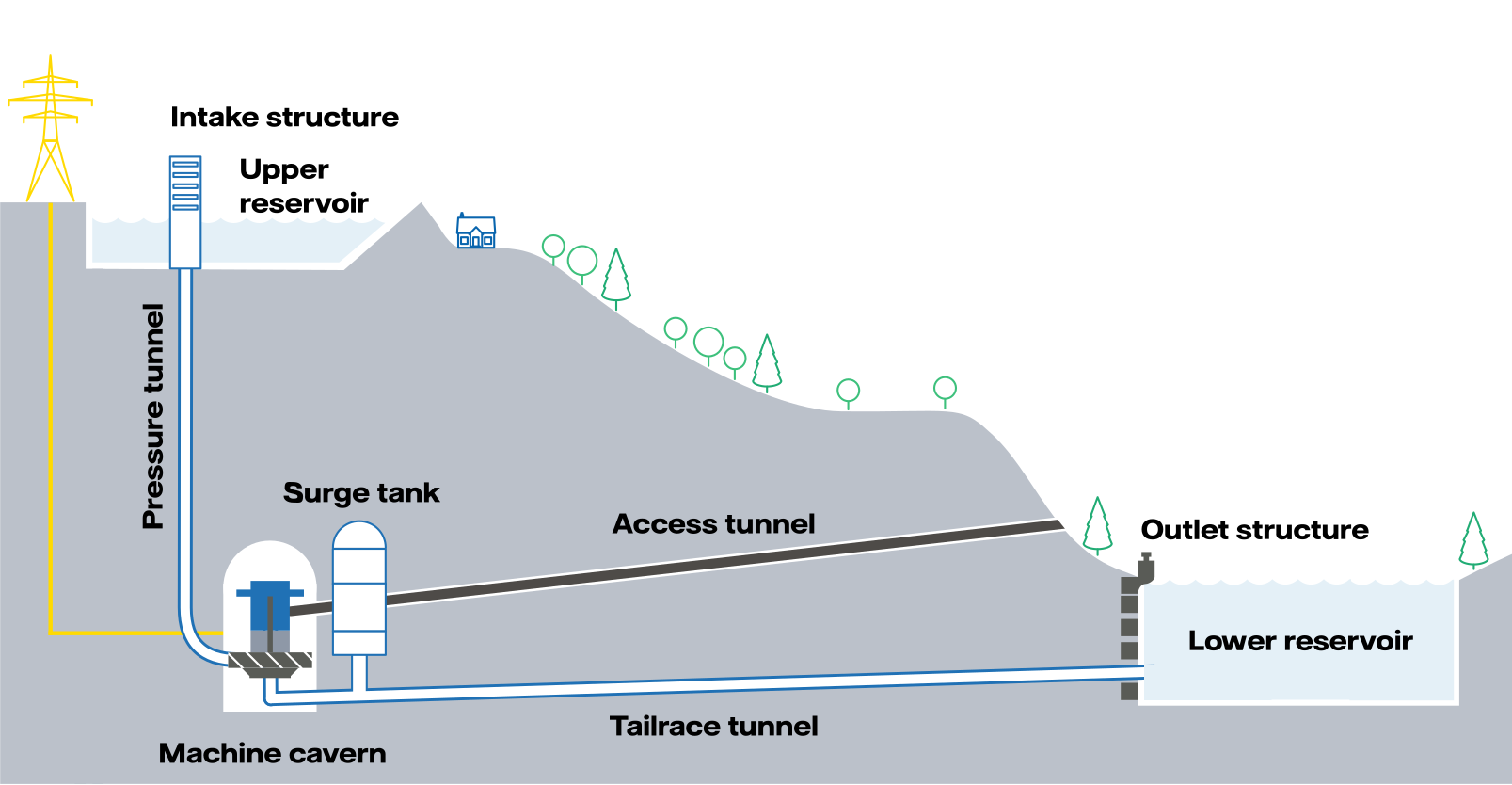
The project includes, among other elements, the construction of an upper and lower reservoir as well as an underground powerhouse cavern, and it is planned to be connected to the existing 380 kV transmission line.
Subject to the necessary approvals, PULS is expected to go into operation in the mid-2030s.
Contribution to Energy Security
The PULS project contributes to supporting the European electricity grid. Its integration into the existing grid enables PULS to support the transition towards a fossil-free energy system by providing storage capacity, improving the use of renewable electricity and helping balance fluctuations in supply and demand:
- Flexibility for renewable energy: The project provides additional storage capacity to help balance fluctuations in electricity generation from renewable sources.
- Fast power availability: Pumped storage plants enable the rapid provision of electricity within 90 seconds and help stabilize the grid when needed.
- Black start capability: Some pumped storage plants can independently restart the grid after a power outage. PULS will also have this capability.
Technical Design and Functionality
The underground powerhouse cavern forms the technical core of the pumped storage plant. It houses the key mechanical equipment needed for power generation and energy storage, including the generator and pump turbine. Together, these components enable water to be moved between the upper and lower reservoirs. A surge tank protects the system against pressure surges.
- Energy storage: When there is excess electricity, water is pumped from the lower reservoir through a tailrace tunnel and pressure shaft via the pump turbine into the upper reservoir.
- Power generation: When electricity is needed, water flows from the upper reservoir through the pressure shafts into the pump turbine, which drives the generator to produce electricity. The water is then discharged back into the lower reservoir via a tailrace tunnel.
Project of Common Interest (PCI)
The expansion of renewable energy and the transition away from fossil fuels also require, at a European level, the promotion of facilities that make a significant contribution to securing energy supply. For this reason, the EU has granted the PULS project the status of a Project of Common Interest (PCI), recognising it as an energy infrastructure project of European relevance.
Projects of Common Interest are key cross-border infrastructure projects that connect the energy systems of European countries. They strengthen the EU internal energy market and security of supply, while supporting sustainability and a climate-friendly energy system.
PCIs benefit from accelerated permitting and regulatory procedures and may gain access to European funding.
European Commission: Key cross-border infrastructure projects
Project timeline

Vattenfall Wasserkraft Puls GmbH
Vattenfall Wasserkraft Puls GmbH, based in Berlin, is developing the PULS pumped storage project in Thuringia. As part of the Swedish energy group Vattenfall AB, the company is one of the largest producers and suppliers of electricity and heat in Europe. Vattenfall is an integrated energy company with a strong focus on its customers.